
Last updated
How Does a Standard Porta Potty Work?
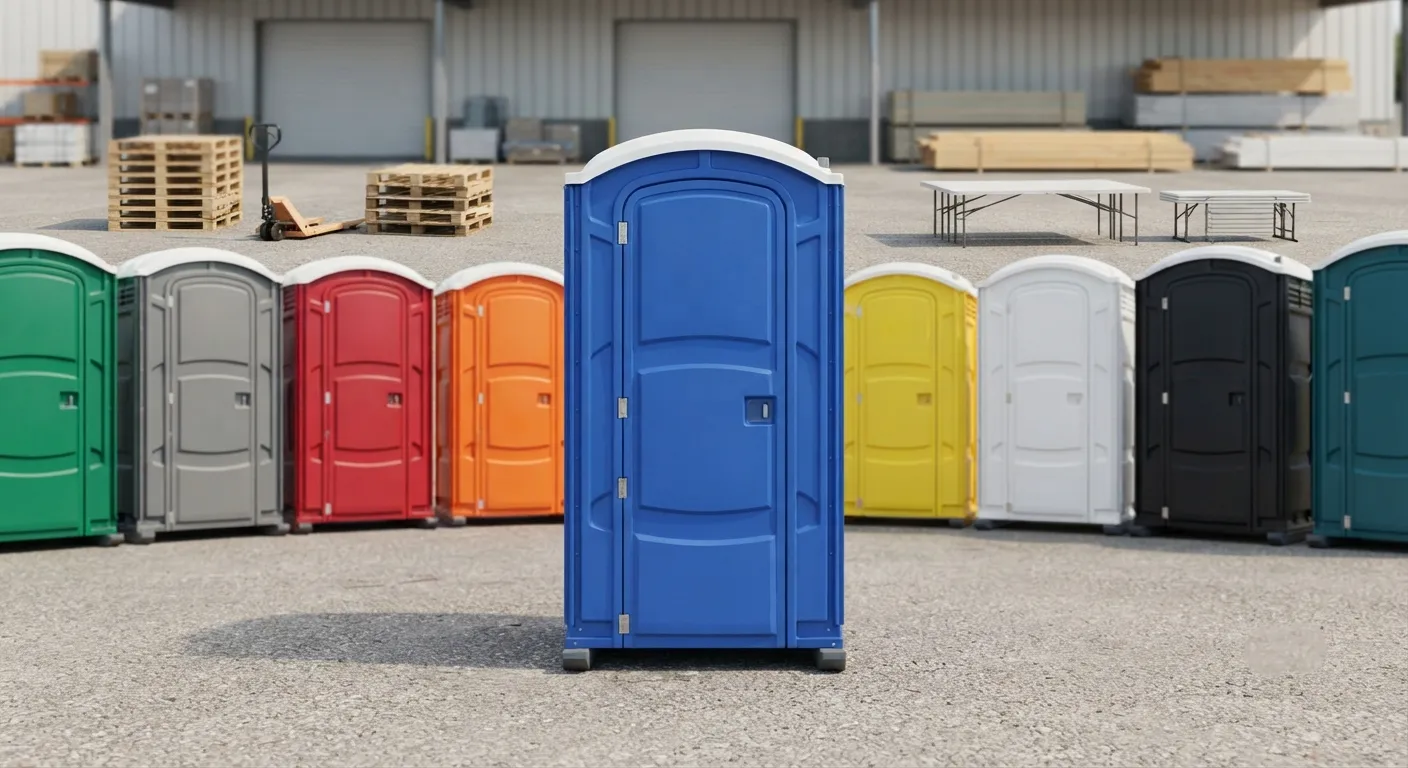
The unit sits on a molded base about 44 by 48 inches, standing roughly 92 inches tall. Underneath the seat is the holding tank. When someone uses it, waste drops straight into that tank, where a blue or green chemical mix breaks down solids and traps odor between service visits. There is no flush, no water supply, nothing to plumb in. That is the whole system, and it is why a standard porta potty rental can drop into a gravel lot or a backyard with zero site prep.
Ventilation vents near the roof pull air through and out, which keeps the chemical smell from building up inside. A construction worker running to a porta potty between shifts is not waiting on anyone. It is available, self-contained, and ready. OSHA 1926.51(c) sets the toilet ratio for construction crews at one unit per 20 workers or fewer, scaling up as headcount grows, which is the baseline most job sites in Savannah plan around. If you are still working out counts, the how many porta potties do I need guide walks through it, and OSHA portable toilet requirements covers the ratio table directly.
How Do Flushable Porta Potties Work?
A deluxe or flushable unit adds a small onboard freshwater tank and a foot pump or handle that pushes a rinse of water into the bowl after use, similar to a low-flow camper toilet. It still drains into the same sealed holding tank below, it just clears the bowl between uses instead of leaving waste sitting visible. That is the main difference buyers ask about when comparing a deluxe flushable porta potty to a standard unit. Some also include a hand sanitizer dispenser or a small sink attachment built into the frame.
Restroom trailers take this further. A restroom trailer rental connects to a freshwater reservoir and a separate holding tank, runs real flush toilets, and often includes climate control. For weddings, corporate events or anything where guests expect a real restroom, a 2 stall restroom trailer or 4 stall restroom trailer handles it without the smell concerns some clients associate with standard units. If ADA access matters, ADA restroom requirements explains clearances, and ADA Standards section 304.3.1 calls for a 60 inch turning circle inside accessible units.

How Does a Portable Sink Work?
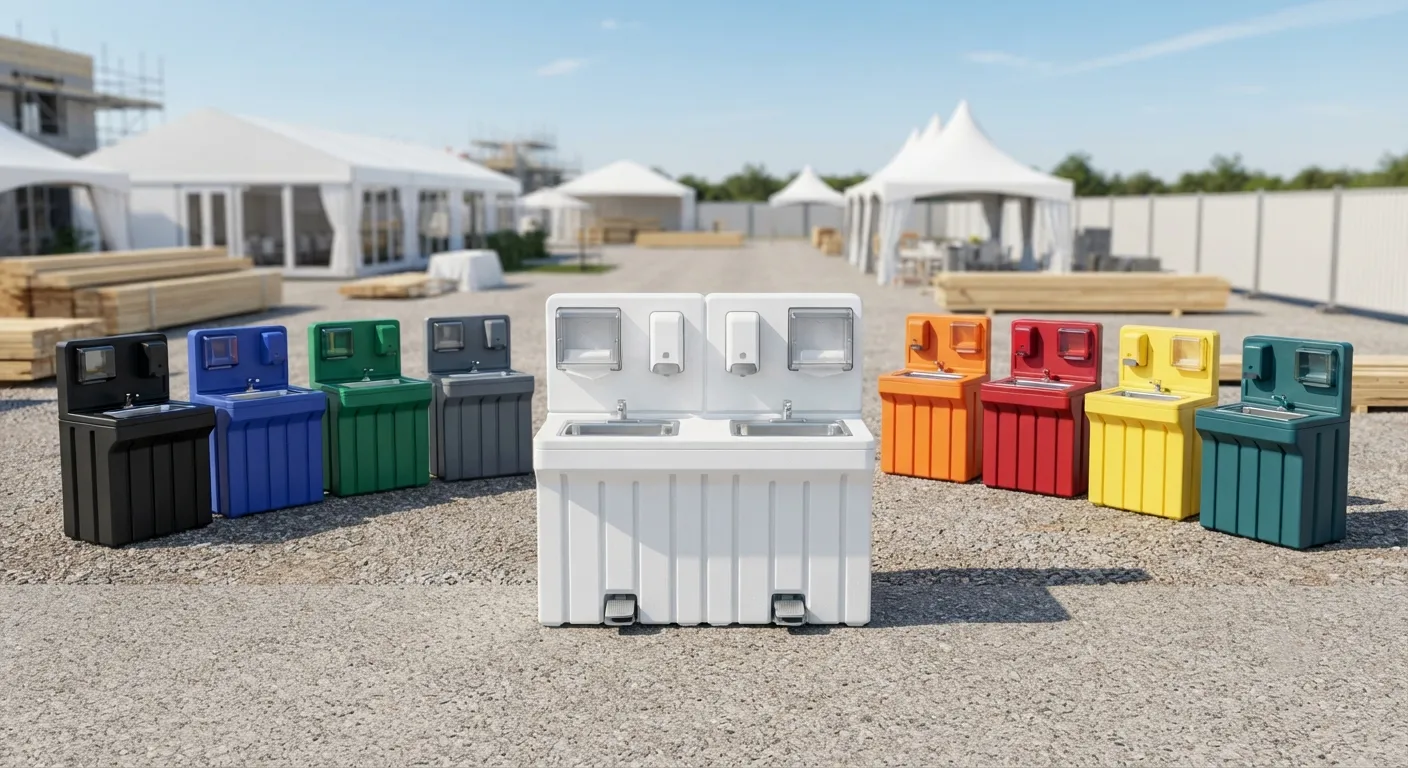
A portable sink runs on the same no-hookup logic as the toilets. It carries its own fresh water in an internal tank, usually gravity fed or pump fed to the faucet, and drains gray water into a separate holding tank underneath. Foot pumps or hand pumps activate the water flow, and most models carry soap dispensers built into the unit. 29 CFR 1910.141(d)(2) requires soap and towels or a hand-drying device at washing facilities, not sanitizer alone, so any handwashing station rental placed on a site needs to meet that standard, not skip it with gel.
These stations matter more than people expect on food service sites, agricultural crews and anywhere paint, coatings or pesticides are in use. OSHA 1926.51(f)(1) specifically requires washing facilities where workers apply paints, coatings, herbicides or insecticides. A portable sink rental satisfies that on a Savannah job site without running a water line across the property. Camping trips use the same setup in miniature: a camping porta potty pairs with a small portable sink so a group can wash hands without walking to a bathhouse.
Do Porta Potties Smell, and How Does Cleaning Work?
Cleaning is what keeps a unit from smelling, and it runs on a schedule, not a guess. ANSI/PSAI Z4.3 sets a baseline of one service visit per week for up to 10 users across a 40 hour week, which is why job sites and long events get regular pump-outs rather than a single drop-off. A technician arrives, pumps the holding tank, refills the chemical charge, restocks paper, and hoses down the interior. For the full rundown on what that visit looks like and how often it happens for your job, see how often are porta potties cleaned and do porta potties smell.
Septic tank cleaning chemicals work on a related but separate system. A residential septic tank, typically 1,000 gallons and up, gets pumped every 3 to 5 years depending on tank size and household size, and a grease interceptor gets pumped once fats, oils, grease and solids reach 25 percent of the liquid depth. Savannah Porta Pros handles both through septic pumping service, septic tank cleaning and grease trap pumping, and if you are not sure your tank is due, septic tank warning signs covers the signals worth watching.
How much does a porta potty rental cost in Savannah?
Standard units run roughly 100 to 350 dollars a day and 130 to 500 dollars a week, based on measured rental data. Multi-week and monthly jobs typically land in the 125 to 325 dollar monthly range per unit. Full breakdowns are on porta potty rental cost and monthly porta potty rental.
Do porta potties need a water hookup?
No. Standard units run entirely on the internal chemical tank system, no water or sewer line required. Deluxe and flushable models carry their own small freshwater reservoir onboard. Only restroom trailers need an external connection or a large internal tank refill for extended events.
How far can delivery reach outside Savannah?
Savannah Porta Pros delivers within roughly a 20 mile radius, covering towns like Garden City 7.5 miles north and Pooler 14.7 miles northwest. Check service areas for the full coverage list and drive distances.
Can I place a porta potty on a public street in Savannah?
That depends on the location and needs confirming with the city before delivery. See porta potty placement guide and porta potty permit requirements for what to check first.
How do camping porta potties work differently from job site units?
They run the same sealed-tank chemical system, just scaled smaller for lighter use. Camping units skip the heavy-duty holding tank sizing that construction crews need, since usage volume is lower. See camping porta potty for sizing guidance.

Next step
Get a delivery date
Tell us the address, the dates and the headcount. We size the order and confirm the route.